
Ade Ardian Lubis & Muhammad Sontang Sihotang
Department of Physics, University of North Sumatra, Medan, Indonesia
ABSTRACT
Fish bone waste is a potential source of biominerals to be converted into calcium phosphate-based value-added materials, especially hydroxyapatite (HAp). This study proposes a Python-based multiscale analytical framework for the extraction, characterization, quantitative analysis and physical interpretation of calcium phosphate derived from fish bone waste, with a focus on the development of nanostructured hydroxyapatite. The research framework integrates experimental characterization, including X-ray diffraction (XRD), Fourier-Transform Infrared Spectroscopy (FTIR), Scanning / Transmission Electron Microscopy (SEM / FE-SEM / TEM), Energy-Dispersive X-ray Spectroscopy (EDS), elemental analysis, particle size distribution, and surface characterization, with Python-based data processing.
Python is used not only as a visualization tool, but also as a computational analysis engine to perform data pre-processing, XRD and FTIR peak detection, crystallite size estimation, SEM / FE-SEM / TEM image segmentation, particle size distribution measurement, Ca/P ratio analysis, correlation analysis, and modeling the relationship between process conditions, structure, particle size, and material properties. This approach is further developed into a multiscale framework that connects macroscopic materials, microstructures, nanostructures, ion and molecular arrangements, atomic structures, nuclei, nucleons, and fundamental particle physics perspectives.
The relationship between nanostructured hydroxyapatite and high-energy particle physics is not positioned as a mechanical reduction of material size toward quarks or the Higgs Boson, but rather as a hierarchical description of matter based on length scales, energy, structure, and fundamental interactions. This framework is expected to produce a new approach that integrates biological waste valorization, calcium phosphate materials, nanotechnology, Python-based computational analysis, multiscale physics, and fundamental matter physics perspectives.
Keywords: fish bone waste, calcium phosphate, hydroxyapatite, nano-hydroxyapatite, Python, multiscale analysis, material physics, particle size distribution, nuclear physics, fundamental particle physics.
INTRODUCTION
Background
The increasing amount of waste from fish processing is both an environmental issue and an opportunity for the development of biomass-based materials. Fish bones are one waste fraction that contains significant amounts of calcium phosphate minerals and has the potential to be converted into value-added materials.
One of the most interesting materials is hydroxyapatite:
[Ca{10}(PO4_6(OH_2], which is structurally and compositionally similar to the inorganic mineral phase in biological bone tissue.
Utilizing fish bones as a source of hydroxyapatite has two strategic advantages. First, biological waste is converted into a functional material. Second, the process can be extended to micro- and nano-sized materials, which have different surface and interfacial characteristics than macro-sized materials.
As particle size decreases from the macroscale to the micro and nanoscale, the surface area to volume ratio increases significantly. For the spherical particle model:
[\frac{A}{V}=\frac{6}{d}]
so that:
[d\downarrow \quad \Rightarrow \quad \frac{A}{V}\uparrow]
These changes can affect surface energy, reactivity, interfacial interactions, adsorption, dispersion, colloidal stability, and the physical and chemical properties of the material.
Therefore, research on fish bones is not sufficient if it is only directed at the question:
“Can fish bones produce calcium phosphate?”
The more fundamental question is:
How do changes in the structure of matter from the macro, micro to nano scale affect the properties of the material, and how can these structures be understood in the hierarchy of matter up to the atomic, nuclear and fundamental particle scales?
Research gaps
Research on hydroxyapatite derived from biological sources generally focuses on:
- extraction method;
- crystal phase;
- particle size;
- morphology;
- Ca/P ratio;
- surface properties; and
- biomedical applications or materials.
However, data from different instruments are often analyzed separately.
XRD provides crystallographic information.
FTIR provides information on bonds and functional groups.
SEM / FESEM / TEM provides morphological information.
EDS / ICP provides elemental composition information.
BET provides surface area information.
DLS provides hydrodynamic size information.
This research proposes that all this information be integrated through Python-based computational analysis .
Thus:
[Data_{experiment}
\rightarrow
Python
\rightarrow
Feature\ extraction
\rightarrow
Multiscale\ analysis
\rightarrow
Structure-Property\ relationship]
become the core of research methodology.
RESEARCH PURPOSES
This research aims to:
- Developing a method for utilizing fish bone waste as a source of calcium phosphate and producing hydroxyapatite with micro to nano sizes;
- Characterizing crystal structure, composition,
morphology, particle size, and surface properties;
- Measuring particle size distribution
Quantitative ;
- Analyzing the relationship between particle size,
crystal structure, composition, and surface properties;
- Building multiscale models of materials
macroscopic to nano-structures;
- Conceptually connecting material structures
with atomic structure, nuclear, and particle physics
fundamental.
- Developing a Python-based data analysis system;
RESEARCH CONCEPTUAL FRAMEWORK
The main framework of the research can be stated:
[\boxed{Waste\ Bone\ Fish\rightarrow
Calcium\ Phosphate\rightarrowHydroxyapatite\rightarrow
Nano-Hydroxyapatite}]
Then a multiscale analysis was carried out:
[\boxed{Macro\rightarrowMicro\rightarrowNano
\rightarrowAtom\rightarrowNucleus\rightarrow
Nucleon\rightarrowQuark}]
Meanwhile, the fundamental physics perspective is continued through:
[Quark + Lepton + Boson\rightarrowStandard\ Model
\rightarrowHiggs\ Field]
It is important to emphasize that these two sets represent a hierarchy of structures and physical descriptions , not a direct physical pathway from fishbones to quarks or Higgs bosons.
- HIERARCHY OF MATERIAL SCALES
| No. | Scale | Long order | Main Object | Physics Approach |
| 1. | Macro | (10^{-3}-10^0) m | Bone / material | Material physics |
| 2. | Micro | (10^{-6}) m | Pores, grains, microstructure | Material physics |
| 3. | Nano | (10^{-9}) m | Nano-HAp | Nanoscience |
| 4. | Atom | (\sim10^{-10}) m | Ca, P, O, H | Atomic physics |
| 5. | Femtometer | (10^{-15}) m | Nucleus | Nuclear physics |
| 6. | Sub-nuclear | (<10^{-15}) m | Nucleons / quarks | Particle physics |
| 7. | High energy scale | very small | Fundamental Particles | High Energy Physics |
Terms such as atto (10⁻¹⁸ m), zepto (10⁻²¹ m) and yocto (10⁻²⁴ m) can be used to conceptually indicate the length scale order, but should not be interpreted as the HAp particle size that can be achieved through the milling process.
RESEARCH METHODOLOGY
Material
The main ingredient:
- fish bone waste;
- de-ionized water;
- washing/deproteinizing agent;
- pH adjuster if used;
- supporting materials for the extraction process.
The type of catfish, source of catfish bone waste, initial conditions, and mass of materials must be recorded systematically.
FISH BONE WASTE PREPARATION
General stages:
[Fish bones\rightarrowWashing\rightarrowRemoval
of organic tissue\rightarrowDrying
\rightarrowRefining\rightarrowExtraction/calcination\rightarrowCaP/HAp]
Process parameters to be recorded:
- temperature;
- time;
- pH;
- initial size;
- grinding method;
- process atmosphere;
- heating rate;
- cooling method.
These parameters then become the input to the Python dataset .
MATERIAL CHARACTERIZATION
XRD
XRD is used to obtain:
- crystal phase;
- top position;
- intensity;
- FWHM;
- crystallinity;
- crystallite size.
Estimation of crystallite size can be done using the Scherrer equation:
[D=\frac{K\lambda}{\beta\cos\theta}]
However, instrumental widening corrections should be made if the data permit.
FTIR
FTIR is used to identify:
- phosphate group;
- hydroxyl;
- carbonate;
- remaining organic components.
The FTIR data was then analyzed using Python to:
- baseline correction;
- smoothing;
- peak detection;
- peak area;
- peak intensity;
- peak position.
SEM/FE-SEM/TEM
SEM / FE-SEM / TEM is used to obtain:
- morphology;
- particle shape;
- aggregation;
- particle size;
- particle distribution.
The digital images are then processed using Python.
PYTHON-BASED IMAGE ANALYSIS
Channel:
[Image\rightarrowPreprocessing\rightarrow
Thresholding\rightarrowSegmentation\rightarrow
Particle\ detection\rightarrowMeasurement]
Obtainable parameters:
- equivalent diameter;
- wide;
- perimeter;
- aspect ratio;
- circularity;
- eccentricity;
- size distribution.
For the i-th particle:
[d_i=Equivalent\ Diameter_i]
And:
[\bar d=\frac{1}{N}\sum_{i=1}^{N}d_i.]
Distribution can be reported by:
[D_{10},D_{50},D_{90}.]
DIFFERENCE BETWEEN PARTICLE SIZE AND CRYSTALLITE SIZE
This is an important aspect of the article.
[D_{particle}\neq D_{crystallite}]
in general.
Particle size is obtained primarily through microscopy or particle distribution techniques.
Crystallite size can be estimated from the broadening of the XRD peaks.
A nanoparticle can consist of several crystallites.
Therefore, the interpretation of the results must distinguish:
[Particle] with:
[Crystallite.]
COMPOSITION ANALYSIS WITH PYTHON
EDS/ICP/XPS data is included in the dataset:
| Element | Concentration |
| Ca | 36 % |
| P | 17.5 % |
| O | 42 % |
| Mg | 0.75 % |
| Na | 0.5 % |
| other | 3.25 % |
import numpy as np
import pandas as pd
# ==========================================
# 1. CONCENTRATION DATA INPUT (EDS / ICP / XPS)
# ==========================================
# Enter the instrument test result value here (% Weight / % Atomic)
data_composition = {
‘Elements’: [‘Ca’, ‘P’, ‘O’, ‘Mg’, ‘Na’, ‘Others’],
‘Concentration (%)’: [36.00, 17.50, 42.00, 0.75, 0.50, 3.25] # Experimental data
}
# Creating a DataFrame
df_composition = pd.DataFrame(data_composition)
# ==========================================
# 2. DATA PROCESSING & CALCULATION
# ==========================================
# Take the concentration values of Calcium (Ca) and Phosphorus (P)
ca_val = df_komposisi.loc[df_komposisi[‘Element’] == ‘Ca’, ‘Concentration (%)’].values[0]
p_val = df_komposisi.loc[df_komposisi[‘Element’] == ‘P’, ‘Concentration (%)’].values[0]
# Calculating the Ca/P Ratio Experiment
ca_p_ratio = ca_val / p_val
# Calculating the Percentage Relative to the Total Concentration
total_concentration = df_composition[‘Concentration (%)’].sum()
df_composition[‘Proportion (%)’] = (df_composition[‘Concentration (%)’] / total_concentration) * 100
# ==========================================
# 3. OUTPUT TABLE & ANALYSIS
# ==========================================
print(“==================================================”)
print(“ELEMENTAL COMPOSITION ANALYSIS TABLE (PYTHON) “)
print(“==================================================”)
print(df_komposisi.to_string(index=False))
print(“——————————————————-“)
print(f”Total Concentration of Elements: {total_concentration:.2f}%”)
print(f”Experimental Ca/P Ratio : {ca_p_ratio:.3f}”)
print(f”Pure Ca/P Ratio (HAp Stoichiometry) : 1.667″)
# Material Phase Evaluation (Indentation Correction here)
deviation = abs(ca_p_ratio – 1.667)
if deviation <= 0.05:
print(“Interpretation: Pure Hydroxyapatite (HAp) Phase”)
elif ca_p_ratio < 1.667:
print(“Interpretation : Calcium-Deficient Hydroxyapatite (CDHAp)”)
else:
print(“Interpretation: Biphasic Calcium Phosphate / There is Ionic Substitution”)
print(“==================================================”)
Program output results:
Main ratio:
compared to the theoretical value of HAp:
= 1.667
Deviations may indicate ionic substitution, other phases, or variations in the composition of the biological material.
SURFACE AREA ANALYSIS
For ball model:
[V=\frac{4}{3}\pi r^3
]
so that:
[\frac{A}{V}=\frac{6}{d}.]
In Python you can create a curve:
[Surface/Volume=f(Particle\ Size)]
to indicate the transition:
[Macro\rightarrow Micro\rightarrow Nano.]
PYTHON DATA INTEGRATION
All data is combined into one matrix:
[X=[T, t, pH, Ca/P, Dp, D_c, Crystallinity, BET,
Zeta, FTIR, XRD ].
With:
- (T) = temperature;
- (t) = time;
- (D_p) = particle size;
- (D_c) = crystallite size.
Next, do:
- correlation;
- regression;
- multivariate analysis;
- clustering;
- machine learning.
Machine Learning
The model can be used to predict:
[D_p=f(T,t,pH)]
or:
[Crystallinity=f(T,t,pH).]
Testable algorithms:
- Linear Regression;
- Random Forest;
- Gradient Boosting;
- Support Vector Regression;
- Neural Network.
Evaluation using:
[R^2][RMSE][MAE.]
Cross – validation should be used to prevent overfitting .
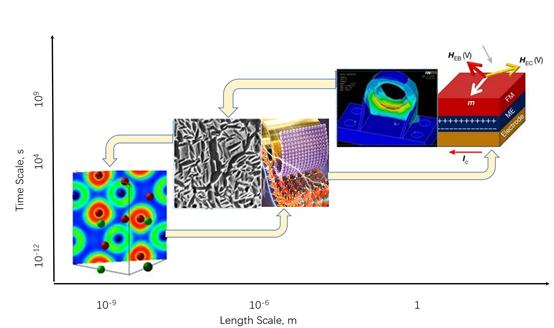
MULTISCALE ANALYSIS
The experimental results can be arranged:
[Processing\rightarrowComposition\rightarrow
Crystal\ Structure\rightarrowParticle\ Size
\rightarrowSurface\rightarrowProperty]
This is the essence of the multiscale structure–property relationship .
Example:
[Temperature\rightarrowCrystallinity]
[Crystallinity\rightarrowSize\crystallite]
[Size\rightarrowSurface\area]
[Area\ surface\rightarrowInteraction\ surface].
RELATIONSHIP WITH ATOMIC PHYSICS
Hydroxyapatite consists of the following elements:
[Ca,\ P,\ O,\ H.]
Every element consists of atoms.
Simply:
[Atom=Nucleus+Electrons.]
The nucleus consists of:
[Nucleus=Proton+Neutron.]
Protons and neutrons are then composite particles composed of quarks and gluons in the QCD framework.
Thus:
[HAp\rightarrowAtom\rightarrowNucleus
\rightarrowNukleon\rightarrowQuark.]
RELATIONSHIP WITH HIGH ENERGY PHYSICS
At very small scales, increasing structural resolution requires increasingly large momentum transfers.
Heuristically:
[\lambda\sim\frac{\hbar c}{E}.]
With:
[\hbar c\approx197.3;MeV,fm.]
So that:
[E\approx\frac{197.3}{L(fm)}MeV.]
This relationship allows Python to create a length–energy map :
[Length\ Scale\leftrightarrowEnergy\ Scale.]
However, this relationship is an interpretation of fundamental physics and not a process of transformation of HAp into elementary particles.
FROM QUARK TO HIGGS FIELD
In the Standard Model, fundamental material includes:
Quarks
- up;
- down;
- charm;
- strange;
- top;
Leptons
- electrons;
- muon;
- know;
As well as the interaction carrier boson and the Higgs boson.
Conceptually:
[Quarks+Leptons+Bosons\rightarrowStandard\
Model.]
The Higgs boson is related to the quantum excitation of the Higgs field.
Thus, this study does not state that hydroxyapatite contains the Higgs boson, but rather places the HAp structure in the FUNDAMENTAL HIERARCHY OF MATERIALS .
EXPECTED RESULTS
Since experimental data are not yet available, numerical values should not be hypothetically generated.
The results to be included include:
Table 1. Material characteristics
| Sample | Ca / P | Phase | Crystallinity | Crystallite size |
| S1 | [ ] | [ ] | [ ] | [ ] |
| S2 | [ ] | [ ] | [ ] | [ ] |
| S3 | [ ] | [ ] | [ ] | [ ] |
Table 2. Particle size distribution
| Sample | D10 | D50 | D90 | Mean | Elementary School |
| S1 | [ ] | [ ] | [ ] | [ ] | [ ] |
| S2 | [ ] | [ ] | [ ] | [ ] | [ ] |
| S3 | [ ] | [ ] | [ ] | [ ] | [ ] |
RECOMMENDED KEY FIGURES
For Q1 articles, a minimum of six main figures are designed.
Figure 1
Conceptual framework of the research
[Fish\Bone\rightarrowCaP\rightarrowNano-HAp
\rightarrowAtomic\rightarrowNuclear\rightarrow
Particle.]
Figure 2
XRD and Python analysis
Raw data → pre-processing → peak detection → crystallite size.
Figure 3
SEM
/ FESEM / TEM and particle-size distribution
Image → segmentation → histogram → D10/D50/D90.
Figure 4
The relationship between particle size and surface-to-volume ratio.
Figure 5
Correlation matrix and machine-learning models.
Figure 6
Multiscale map of matter and energy
[Macro\rightarrowMicro\rightarrowNano\rightarrow
Atomic\rightarrowNuclear\rightarrowQuark
\rightarrowStandard\ Model.]
RESEARCH NOVELTY
The novelty of this research is not only:
“Producing hydroxyapatite from fish bones.”
Stronger novelties are:
Novelty 1
Developing fish-bone-derived calcium phosphate as a value-added material within a circular economy framework.
Novelty 2
Integrating multi-instrument material characterization into a Python-enabled computational workflow .
Novelty 3
Transforming SEM/FE-SEM/TEM and XRD data into quantitative parameters that can be compared across scales.
Novelty 4
Building data-based structure–property relationships .
Novelty 5
Developing a multiscale physics framework that conceptually links nano-materials with atomic, nuclear, and fundamental structures.
Novelty 6
Using length–energy analysis to explain the difference between the material scale and the high-energy particle physics scale .
SCIENTIFIC SIGNIFICANCE
This research positions fish bone waste not merely as a source of calcium, but as a starting point for studying multiscale material transformations.
Conceptually:
[\boxed{Waste\rightarrowMaterial\rightarrow
Nanomaterial\rightarrowAtomic Structure
\rightarrowNuclear Structure\rightarrowFundamental
Materials}]
Python serves as a computational bridge that allows various experimental data to be translated into comparable physical parameters.
Thus, this research is at the intersection of:
- Zero Waste
- Circular Economy
- Biomaterials
- Nanotechnology
- Computational Materials Science
- Multiscale Physics
- Fundamental Physics.
RESEARCH LIMITATIONS
Some limitations need to be emphasized.
First, the particle sizes obtained from SEM/FE-SEM/TEM are not identical to the hydrodynamic sizes from DLS.
Second, the crystallite size obtained from XRD is not automatically the particle size.
Third, fish bones are biological materials so variations in species, habitat, age, and processing can cause variations in composition.
Fourth, machine learning requires a large and high-quality dataset.
Fifth, the relationship with Quarks and the Higgs field is a fundamental interpretation , not proof that material processing produces quarks or the Higgs boson.
CONCLUSION
This research develops a framework
Python-Based Multiscale Analysis to convert fish bone waste into nano-structured calcium phosphate and hydroxyapatite materials that can be quantitatively characterized.
The main advantage of this approach lies in the INTEGRATION between Experimental Characterization and Computational Analysis.
Python can be used to process X-RD, FT-IR, SEM/FE-SEM/TEM, EDS/ICP data, particle size distribution, surface area, and structure-property relationships.
The multiscale framework further allows material structures to be understood through a hierarchy:
[Macro\rightarrowMicro\rightarrowNano\rightarrow
Atom\rightarrowNucleus\rightarrowNucleon\rightarrow
Quark\rightarrowStandard\ Model.]
The Higgs field is placed at the Fundamental Physics level as part of the Standard Model Framework, not as a Component of Hydroxyapatite.
Thus, this approach opens up opportunities for the development of Cross-Disciplinary Research that combines the valorization of fish bone waste, calcium phosphate materials, nano-HAp, Python computing, material physics, nuclear physics and fundamental particle physics perspectives .
RESEARCH DEVELOPMENT DIRECTION
The next steps required are:
Stage 1 — Experiment
[Fish\bone\rightarrow CaP/HAp]
Stage 2 — Characterization
[XRD+FTIR+SEM/FE-SEM-TEM+EDS/ICP+BET+DLS]
Stage 3 — Python
[Raw\ Data\rightarrowProcessing\rightarrow
Feature\rightarrowModel
Stage 4 — Optimization
[Machine\Learning\rightarrowOptimal\Processing]
Stage 5 — Multiscale Physics
[Macro\rightarrowMicro\rightarrowNano\rightarrow
Atomic\rightarrowNuclear\rightarrowParticle.]
Stage 6 — Publication
Experimental articles → computational articles → perspectives
e / fundamental physics review .